Innovation Drywall of Edmonton: Drywall Repair and Installation Contractors in Edmonton, AB
Commercial and Residential Specialists
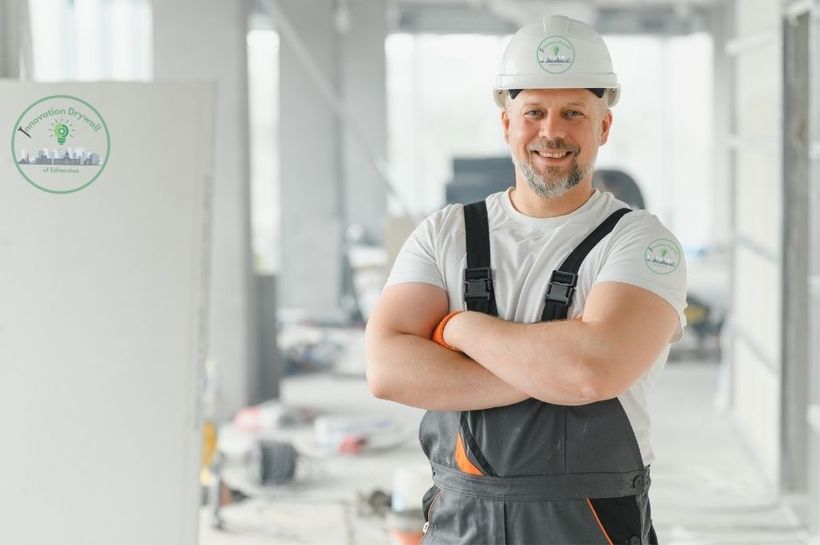
Innovation Drywall of Edmonton is a drywall contractor with 19 years of experience that provides professional drywall repair, installation and finishing services in Edmonton, AB.
Our residential and commercial drywall contractors handle popcorn ceiling removal, wall and ceiling crack repair, applying drywall texture and water damage repair for residential properties. Our finishers match existing textures and tape to a Level 4 standard, the benchmark for most residential walls and ceilings.
Our drywall company also offers steel/metal stud framing, fire-rated and soundproof drywall installation, partition wall construction, drywall ceiling systems and mudding/taping for commercial properties. Our fire-rated assemblies use Type X board tested to ASTM E119, and our soundproof systems are built for higher STC ratings through to Level 5 finishes.
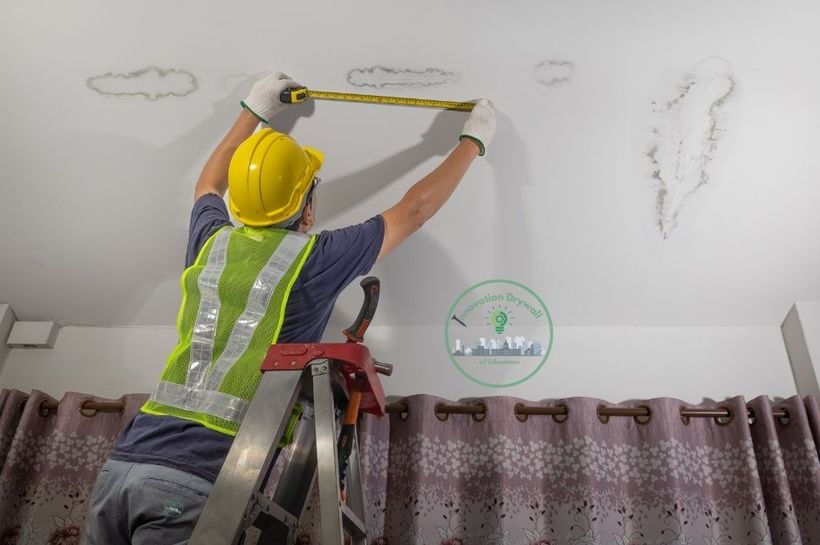
With 19+ years of experience serving Edmonton, Alberta property owners, our team focuses on restoring damaged drywall surfaces safely and correctly, from metering moisture behind water-damaged board to staggering seams against Edmonton's seasonal humidity swings, so walls and ceilings maintain their strength and appearance.
Give our drywall company a call today at 587-415-7651 or fill out the quote form to schedule a service with us for durable solutions built for lasting performance.

Residential Drywall Installation and Repair Services
Residential Drywall Installation
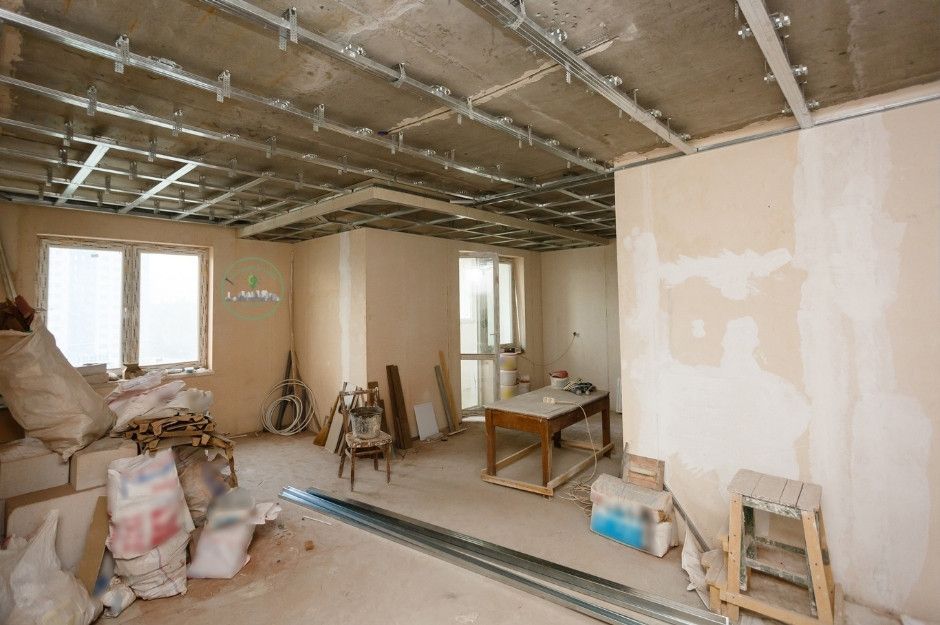
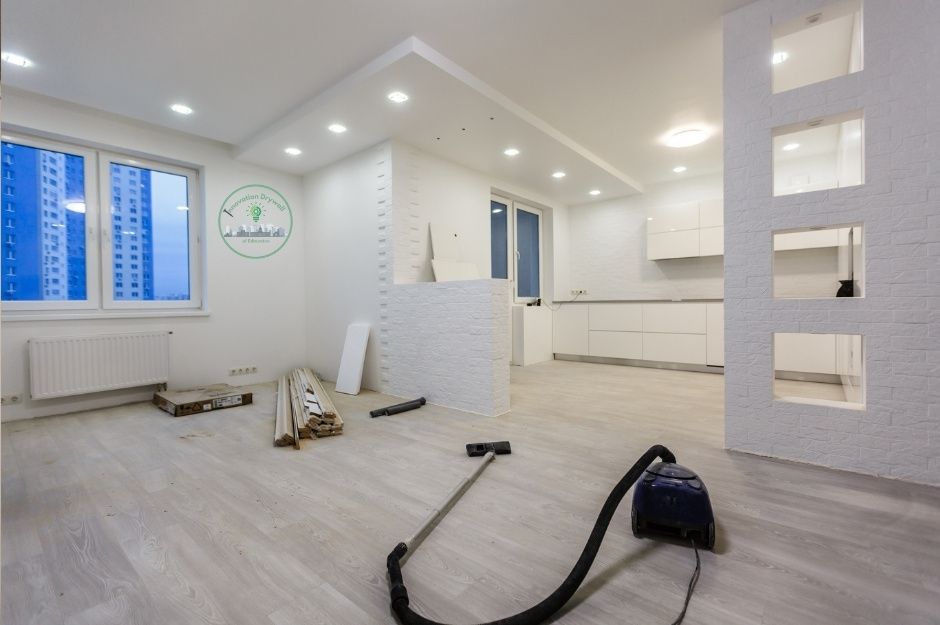
Innovation Drywall of Edmonton installs new drywall for renovations, additions, and new construction. Our hanging crew fastens panels to walls and ceilings at 16 or 24 inch on-centre studs, staggering seams to resist future cracking. Tapered edges let each joint sit flush and concealed. We cut panels on-site around outlets and fixtures, reducing waste while keeping the finished surface flat and even.
Residential Drywall Repair & Patching
Our patch crew fixes holes, dents, and gouges from furniture, door handles, and daily accidents. Small holes take self-adhesive mesh and compound, while larger openings need a cut-in patch back-blocked and matched to the surrounding board thickness. We feather each repair past its edges and restore damaged corner beads so the fix disappears once primed and painted.
Popcorn Ceiling Removal & Repair
Our texture crew removes dated popcorn texture and replaces it with a smooth or updated ceiling finish, misting the surface to soften the stipple, scraping it down, then skim-coating the ceiling flat before refinishing. Ceilings installed before 1990 may contain asbestos, so we recommend testing before any scraping begins.
Drywall Ceiling Installation & Repair
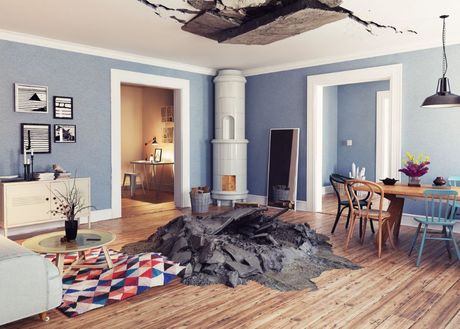
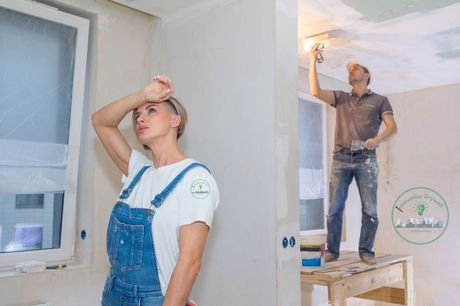
We install and repair ceilings affected by sagging, water stains, cracks, and settlement. Since ceiling panels carry their own weight against gravity, our install crew uses 5/8 inch sag-resistant board on 24 inch joists and tighter screw spacing than walls to prevent future sagging. We repair seam cracks near fixtures and screw pops from framing movement.
Drywall Finishing & Texture Matching
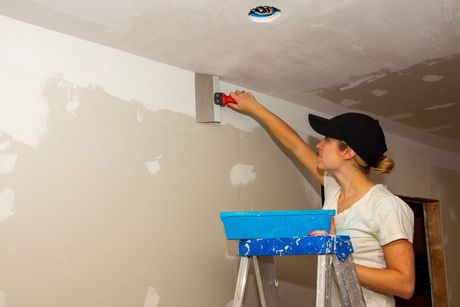
Our finishers apply joint compound in three coats, embedding tape, filling, then feathering a finish coat sanded paint-ready. Level 4 is our residential standard for most walls and ceilings. Matching existing texture is where the crew earns its keep, blending smooth, orange peel, knockdown, or skip trowel so repaired sections vanish under paint with no visible patchwork.
Basement Drywall Installation & Repair
We finish basement renovations with moisture-resistant board suited to below-grade humidity. Since panels near concrete foundations are prone to wicking, our crew holds the board off the slab with a bottom gap and confirms vapour barrier and insulation before hanging. This detailing reduces future moisture problems, a common concern in Edmonton basements.
Bathroom Drywall Installation & Repair
Our team installs wet-area board where humidity is highest, using moisture-resistant panels on damp walls and cement board as the tile backer behind showers and tubs. Standard panels break down in these conditions, so material choice matters most here. We seal and prime each surface to resist steam, and reinforce backing behind grab bars and vanities.
Drywall Crack Repair
We repair cracks from building settlement, seasonal humidity swings, and truss uplift at wall-to-ceiling corners. Hairline cracks get filled and sanded, while wider cracks need the joint re-taped rather than just filled, since a filled crack without tape reopens. When cracks keep returning in one spot, our crew assesses the framing before refinishing the surface.
Water-Damaged Drywall Repair
Our repair crew restores drywall after leaks, ice-dam backups, and plumbing failures. Wet gypsum swells, stains, and grows mould, so saturated board gets cut out and replaced, never skimmed over. We meter moisture in the surrounding board, insulation, and framing until the cavity reads dry, then install new panels. We recommend fixing the water source before repairs begin.
Commercial Drywall Installation and Repair Services
Commercial Drywall Installation
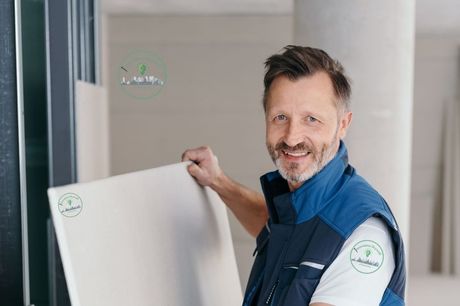
As a drywall contractor handling commercial new construction and tenant improvements, we plan panel layout across long wall runs with control joints that absorb thermal and building movement, preventing the cracking that plagues uninterrupted spans. Our install crew coordinates high-volume board handling around occupied floors, sequencing work to keep tenant operations running with minimal disruption.
Commercial Drywall Repair
Our repair crew services commercial drywall in occupied offices, retail storefronts, warehouses, and healthcare facilities. We contain dust and work around business hours, restoring impact damage from equipment and forklifts and worn high-traffic surfaces without shutting the space down. With 19 years of experience, Innovation Drywall of Edmonton minimizes tenant downtime while returning walls to a clean, finished condition.
Commercial Drywall Finishing & Level 5 Finishes
We deliver GA-214 finish levels through Level 5, where a full-surface skim coat over standard Level 4 work erases the difference between compound and panel face under critical lighting. Since Level 5 adds 30 to 60 percent finishing labour, our finishing crew reserves it for showrooms, corporate lobbies, and gloss or semi-gloss coatings, matching lower levels to concealed spaces.
Fire-Rated Drywall Systems
Our crew installs fire-rated assemblies using 5/8 inch Type X and additive-enhanced Type C gypsum board, both built on a noncombustible core specified to ASTM C1396 and tested to ASTM E119. We build UL-classified assemblies rated one to four hours for stairwells, exit corridors, mechanical rooms, and tenant separation walls, sealing penetrations around pipe and conduit to preserve the rating.
Steel / Metal Stud Framing
We frame commercial interiors with light-gauge steel studs and track, non-combustible and dimensionally stable where wood would warp. Our framing crew selects gauge and spacing to wall height, adding blocking where partitions carry fixtures, shelving, or equipment. Straight, true steel framing gives panels a flat plane to fasten against, the foundation of every clean finished wall.
Commercial Partition Walls
Our crew builds and removes partitions so businesses can reconfigure layouts as needs change, dividing open floors into offices or consolidating rooms back into open space. We frame full-height and partial-height partitions with openings for doors and glazing, and before cutting into anything we map electrical runs and HVAC so partition work never collides with existing building infrastructure.
Soundproof Drywall Systems
We build acoustic assemblies that raise STC ratings for conference rooms, medical offices, and demising walls. Since mass and decoupling drive noise control, our crew pairs double 5/8 inch panels with damping compound between layers, mounts board on resilient channel or sound clips, and packs acoustic batt into the cavity. One unsealed edge or penetration undercuts the whole assembly.
Commercial Drywall Ceiling Services
Our crew builds hard-lid drywall ceilings, bulkheads, and soffits across commercial spaces, framing in access panels and coordinating layout with lighting, sprinklers, and mechanical already overhead. Because ceiling spans fasten against gravity, we tie into the framing above and hold overhead board on tighter fastening than walls, keeping large commercial lids flat and sag-free over their full run.
Commercial Drywall Taping & Mudding
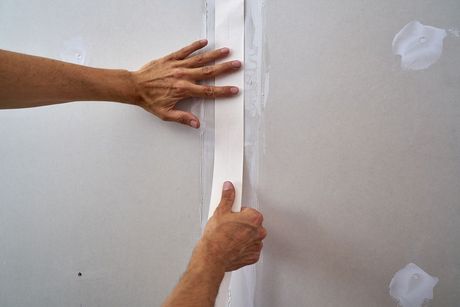
We run high-production taping across large commercial square footage using automatic tools, the bazooka for embedding tape and flat boxes and angle heads for building consistent coats. Our taping crew keeps joint and coat quality uniform over vast wall runs, moving faster than hand-taping while feeding a smooth, crack-resistant base ready for whatever finish level the project calls for.
Why Choose Innovation Drywall of Edmonton as Your Drywall Contractor
- Our company has 19 years of drywall repair experience serving Edmonton homes and buildings
- Fully insured (5 million liability coverage), WCB coverage, and bonded drywall contractors, providing peace of mind for homeowners, property managers, and business owners
- Specialists in water damage repair, ceiling restoration, and drywall crack repairs
- Reinforced drywall repair methods designed for long-term durability
- Experience repairing drywall in both older Edmonton homes and modern construction
- Experience in commercial environments where efficient coordination, durable materials, and strict adherence to building standards are met.
- Clean and controlled repair work environments that minimize disruption
- Repairs designed to address the cause of drywall damage, not just the visible surface
Schedule Your Drywall Repair or Installation in Edmonton Today
Drywall damage should be repaired as soon as possible to prevent further structural problems or cosmetic deterioration. Whether the issue involves wall damage, ceiling leaks, moisture-related deterioration, or drywall cracks, professional repairs help restore the strength and appearance of your interior surfaces.
Innovation Drywall of Edmonton provides both residential and commercial drywall repair throughout Edmonton. Our team focuses on durable repairs that address the source of drywall damage and restore walls and ceilings right the first time.
Call 587-415-7651 today to schedule your drywall repair assessment.